
двигатель VR6
Двигатель VR6 engine — это шестицилиндровый двигатель, разработанный компанией Volkswagen. Название VR6 происходит от сочетания немецких слов «Verkürzt» и «Reihenmotor», что означает «укороченный» и «рядный двигатель» соответственно. Он был разработан специально для поперечной установки двигателя и автомобилей с передним приводом (FWD) vehicles. The VR6 is a highly compact engine, due to the narrower angle of 10.5 to 15 degrees between adjacent cylinders, as opposed to a V6 engine with angles ranging from 45 to 90 degrees. The compact design is cheaper to manufacture, since only one cylinder head is required for all six cylinders, much like a regular inline-6 engine.
Volkswagen Group представил первый двигатель VR6 в 1991 году, и двигатели VR6 оставались в производстве до конца 2024 года. [1] Volkswagen также выпускал пятицилиндровый двигатель VR5 на базе VR6.
Описание
VR6 engines share a common головку блока цилиндров for the two banks of cylinders. Only two распределительных вала are needed for the работы двигателя, regardless of whether the engine has two or четыре клапана per cylinder. This simplifies engine construction and reduces costs.
Since the cylinders are not located on the centreline of the combined cylinder head, the lengths of the впускных and exhaust ports are different for each bank. Without compensation, these varying port lengths would result in the two banks of cylinders producing different amounts of power at a particular engine RPM. The difference in port lengths are compensated for with the length of the runners in the впускном коллекторе, the camshaft overlap and lift profile, or a combination thereof.[citation needed]


двигатели Volkswagen

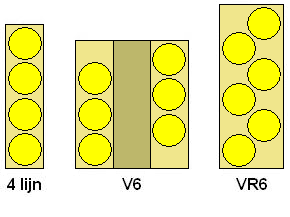
The Volkswagen VR6 engine was designed for поперечной installations in с передним приводом vehicles.[2] The narrow angle of 15° between the two рядами цилиндров reduced the width of the engine, compared to a traditional V6 engine. Therefore, the VR6 engine is easier to fit within an engine bay that was originally designed for a четырехцилиндрового двигателя.[citation needed]
12-клапанные версии
Ранние двигатели VR6 имели по два клапана на цилиндр (всего двенадцать клапанов) и использовали один распределительный вал для впускных и выпускных клапанов каждого ряда цилиндров (без использования коромысел).
The first Volkswagen VR6 engine uses the версию AAA. It had a bore of 81.0 mm (3.19 in) and a stroke of 90.3 миллиметра (3.56 in), for a total рабочий объём of 2.8 L (171 cu in). In 1994, a 2.9 L (177 cu in) версия ABV объёмом was introduced in some European countries, with an increased bore of 82.0 mm (3.23 in).
The V angle between the cylinder banks is 15°, and the степень сжатия is 10:1.[3] The вал runs in seven main bearings and the journals are offset 22° to one another, in order to accommodate the offset cylinder placement.[4] This also allows the use of a 120° firing interval between cylinders.[5] The зажигания is: 1, 5, 3, 6, 2, 4.[6] The centerlines of the cylinders are offset from the centerline of the crankshaft by 12.5 mm (0.49 in).
Размеры клапанов: 39.0 mm (1.54 in) для впуска и 34.3 mm (1.35 in) для выхлопной системы. Поскольку два ряда поршней и цилиндров используют одну головку блока цилиндров и прокладку головки, верхняя поверхность поршня наклонена. Система управления двигателем Bosch Motronic.
24-клапанные версии
A version with four valves per cylinder (for a total of 24 valves) was introduced in 1999.[7] В 24-клапанных версиях один распределительный вал используется для впускных клапанов обоих рядов цилиндров (с помощью коромысел для достижения самого дальнего ряда), а другой распределительный вал — для выпускных клапанов обоих рядов (опять же, с помощью коромысел). [8] Этот принцип работы больше похож на конструкцию с двумя верхними распределительными валами (DOHC), где один распределительный вал предназначен для впускных клапанов, а другой — для выпускных.
История
The 1922–1976 Двигатель Lancia V4 and 1922–1939 двигатель Lancia V8 were the first narrow angle V engines to be used in a motor vehicle.[9][10]
The first versions of the VR6 engine were introduced in the 1991 Volkswagen Passat B3 sedan and Volkswagen Corrado coupe.[11] A 2.8 L (171 cu in) Версия AAA producing 128 kW (172 hp) was used in most Passat models and in the North American version of the Corrado. A 2.9 L (177 cu in) Версия ABV объемом producing 140 kW (188 hp) was used in the Passat Syncro model and the European version of the Corrado. Both versions used two valves per cylinder. Usage of the VR6 engine spread to the Volkswagen Golf Mk3 2.8 VR6 and Volkswagen Vento/Jetta (A3), 2.8 VR6 models in 1992, and high specification versions of the Sharan/Galaxy/Alhambra MPVs. The 2.8 litre version was also used in the 1996–2003 Mercedes-Benz Vito (W638) commercial vans, where it was designated M104.900.
В 1997 году был представлен двигатель VR5, созданный на базе двигателя VR6.
An объемом with four valves per cylinder was introduced in 2000. This 2.8 L (171 cu in) engine produced 150 kW (201 hp), and mostly replaced the two-valve engines, except for in North America where an updated version of the two-valve engine was used in the Golf and Jetta from 2000 to 2002. From 2003 to 2005 the 2.8 L four valves per cylinder engine was used in specific Golf and Jetta models.[12]
A 3.2 L (195 cu in) EA390 version of the 4 valve engine was introduced in the 2001 Volkswagen New Beetle RSi Эта модель также использовалась в модификациях 3.2-литрового двигателя в период с 2002 по 2004 год. Volkswagen Golf Mk4 R32 модель 2003-2010 гг. Audi TT 3.2 VR6 quattro модели и 2003-2009 гг. Audi A3 8P 3.2 VR6 Quattro(Модели для США). Максимальная выходная мощность составляла 165 kW (221 hp) in the New Beetle (engine code AXJ), 177 kW (237 hp) in the New Beetle and Golf (engine code BFH/BJS), and 184 kW (247 hp) in the Audi TT(engine code BHE) and Audi A3 8P(engine code BDB / BMJ / BUB).
The engine size was again increased in 2005, when a 3.6 L (220 cu in) version with непосредственным впрыском бензина (FSI) was introduced in the Volkswagen Passat (B6). This версия BLV uses a narrower 10.6 degree angle between the cylinder banks and produces 206 kW (276 hp). A 3.2 L (195 cu in) версия AXZ объемом producing 184 kW (247 hp) was introduced in 2006.[13] In 2008, an uprated BWS version of the 3.6 litre engine producing 220 kW (295 hp) was introduced in the Volkswagen Passat (B6) R36 model.[14]
Базовая модель Porsche Cayenne (9PA) used the 3.2-liter VR6 engine from 2003 to 2006 and then a 3.6-litre VR6 engine from 2008 to 2010. Then the next generation Porsche Cayenne (92A) also used a 3.6-litre VR6 engine from 2010 to 2018.
Компания Volkswagen начала поэтапно отказываться от двигателей VR в пользу уменьшенных по объему турбированных четырехцилиндровых двигателей. Двигатель VR6 был снят с производства для Volkswagen Passat NMS к 2019 году, оставив Volkswagen Atlas единственной моделью с этим двигателем на тот момент. В конечном итоге, производство VR6 было прекращено на большинстве рынков, когда Volkswagen Atlas перестал предлагать этот двигатель в качестве опции с 2023 года.
Volkswagen never entirely abandoned the platform and designed a new VR6 (still EA390) for the Chinese market only, 2.5-литровый турбированный 24-клапанный двигатель VR6 producing 220 kW (295 hp) and 500 N⋅m of torque, for the Volkswagen Teramont SUV and Volkswagen Talagon MPV. The engine has been available since the Teramont debuted in 2017 and were built in Germany and shipped to China and comply with their unique tax and emissions regulations.
Культура энтузиастов
Двигатель VR6 приобрел культовый статус в автомобильных и тюнинговых сообществах, во многом благодаря своему характерному, низкому звуку выхлопа и компактной конструкции, что делает его распространенным выбором для замены двигателя в тюнинговой среде Volkswagen. Акустический профиль двигателя заставил энтузиастов дать ему прозвище в честь вымышленного персонажа «Звездных войн» Чубакки, а также вдохновил на название ежегодного собрания автомобилей с двигателем VR6 под названием «Вуки в лесу». [15][16][17]
Приложения
Автомобили Volkswagen Group:
- 1991–1995 Фольксваген Коррадо
- 1991–2015 Volkswagen Passat (B3), Volkswagen Passat (B4), Volkswagen Passat (B6) and Volkswagen Passat (B7) generations
- 1992–1998 Фольксваген Гольф Мк3
- 1992–1999 Фольксваген Венто/Фольксваген Джетта Мк3
- 1995–2000 Volkswagen Sharan
- 1996–2003 Фольксваген Транспортер (Т4)
- 1996–2010 СЕАТ Альгамбра (7М)
- 1998–2003 Фольксваген Гольф Мк4
- 1999–2005 Фольксваген Бора/Фольксваген Джетта Мк4
- 2000–2004 SEAT León (1M)
- Volkswagen New Beetle RSi 2001–2003 гг.
- 2002–2016 Фольксваген Фаэтон
- 2002–2018 Фольксваген Туарег
- 2002–2018 Porsche Cayenne E1 and E2 generations
- 2003–2009 Фольксваген Транспортер (Т5)
- 2003–2013 Audi A3 (8P)
- 2003–2010 Audi TT Mk1 and Mk2
- 2005–2008 Volkswagen Golf Mk5 R32
- 2006–2011 Volkswagen Eos
- 2008–2017 Volkswagen CC
- 2008–2014 Шкода Суперб (3Т)
- 2008–2015 Audi Q7 (4L)
- 2011–2018 Volkswagen Passat NMS
- 2017–2024 Volkswagen Atlas
- 2017–2024 Фольксваген Терамонт
- 2021–2024 Volkswagen Talagon
- 2022–2024 Audi Q6
Другие производители:
- 1995–2000 Ford Galaxy Mk I
- 1996–2003 Mercedes-Benz Vito (W638)
- 1997–2005 Виннебаго Риальта/Виста/Итаска Санстар
- 2006 – Да! 2
- 2009–2012 Артега ГТ [18]
- Вилочные погрузчики Linde (работающие на сжиженном нефтяном газе) [19]
Двигатели W
Концерн Volkswagen Group выпустил несколько двигателей серии W, основанных на объединении двух двигателей VR на общем коленчатом валу. Первым серийным двигателем серии W стал двигатель W12, выпускавшийся с 2001 года. Двигатель W12 можно рассматривать как два двигателя VR6, расположенных под углом 72 degrees. Although Volkswagen has not produced a VR4 engine, it produced a двигатель W8 from 2001 to 2004, which can be thought of as two VR4 engines on a common crankshaft.
Самый мощный двигатель Volkswagen W — это двигатель W16, представленный на Bugatti Veyron в 2005 году. Этот двигатель можно рассматривать как два двигателя VR8, расположенных под углом 90 градусов. Кроме того, он оснащен четырьмя турбокомпрессорами.
Другие производители
Производитель мотоциклов Horex выпускает двигатели VR6 с 2012 года. [20][21]
Ссылки
- 1 2 Padeanu, Adrian (2024-12-19). «Volkswagen создал свой последний двигатель VR-6». Motor1 . США: Motorsport Network. Дата обращения: 2024-12-20.
- ↑ "Двигатели V5 и VR6 от VW". heritagepartscentre.com/uk/. 3 August 2017. Retrieved 19 ноября 2019.
- ↑ Clemens, Kevin (15 October 2006). VW GTI, Golf, Jetta, MK III и IV. St. Paul, MN: Motorbooks International. p. 22. ISBN 0-7603-2595-2.
- ↑ Raven, Gregory; Erickson, Chad (18 May 2011). Справочник по характеристикам автомобилей VW с водяным охлаждением: 3-е издание. MBI Publishing. p. 41. ISBN 978-1610601993.
- ↑ Barber, Thomas. «Мотоцикл Horex VR6». Motorcycle Daily. Retrieved 23 июня 2014.
- ↑ Schenck, M (1991). Автомобильное проектирование. Century Press.
- ↑ "Двигатель Volkswagen VR6". www.automobilemag.com. 21 July 2010. Retrieved 20 ноября 2019.
- ↑ "Технические характеристики двигателя R32 3.2 VR6 EA390". www.motorreviewer.com. Retrieved 19 ноября 2019.
- ↑ "Часть I: V-образные двигатели". TopSpeed.com. 29 July 2006. Retrieved 20 ноября 2019.
{{cite web}}: CS1 обслуживание: устаревшая служба архивирования ( ссылка) - ↑ «Тема: Двигатели – Божественное влечение». www.driventowrite.com. 29 August 2014. Retrieved 20 ноября 2019.
- ↑ "VW's new 496bhp 3.0-litre VR6 engine". www.autocar.co.uk. Retrieved 20 ноября 2019.
- ↑ M, Eric (April 25, 2019). «Двигатели VR и W — объяснение!». Gran Touring Motorsports. Retrieved 14 августа 2025.
- ↑ "The Passat (sales brochure) – 3.2 FSI VR6" (PDF). Volkswagen Group United Kingdom Limited. Volkswagen.co.uk. 1 December 2008. pp. 14, 18, 24. Archived from оригинала (PDF) on 15 February 2010. Retrieved 31 июля 2009.
- ↑ "The Passat (sales brochure) – 3.6 FSI VR6" (PDF). Volkswagen Group United Kingdom Limited. Volkswagen.co.uk. 1 December 2008. pp. 11, 12, 14, 19, 24. Archived from оригинала (PDF) on 15 February 2010. Retrieved 31 июля 2009.
- ↑ «Volkswagen прекратил производство VR6, положив конец звучанию своего шестицилиндрового двигателя». Car and Driver. 2024-12-20. Retrieved 2026-09-05.
- ↑ "У Volkswagen Atlas 2021 года более привлекательный внешний вид и такое же просторное салонное пространство". Car and Driver. 2020-05-15. Retrieved 2026-09-05.
- ↑ "О нас". Вуки в лесу . Retrieved 2026-09-05.
- ↑ "2009 Artega GT – Review – Car and Driver". caranddriver.com. 22 June 2009. Retrieved 9 апреля 2018.
- ↑ "Вагончик с противовесом и двигателем внутреннего сгорания | H50 – H80 EVO" (PDF). Linde Material Handling. Retrieved 23 ноября 2020.
- ↑ "Horex VR6". www.roadandtrack.com. 24 May 2013. Retrieved 19 ноября 2019.
- ↑ «Horex VR6 Raw — это двухколесный монстр с двигателем V6». www.rideapart.com. Retrieved 19 ноября 2019.
Источники
- Участники английской Википедии. «VR6 engine». Перевод на русский. CC BY-SA 4.0 (текст и перевод).
Источники иллюстраций
- 2.9VR6 140kW ABV Corrado.jpg · Лицензия файла уточняется
- Klepbediening VR6 24V.PNG · Original uploader was Toffguy at nl.wikipedia (Original text: Toffguy (uploader van het bestand) ) · CC BY-SA 3.0
- Kleppen VR6-motor 12V-contrast.PNG · Toffguy at Dutch Wikipedia ( Original text: Toffguy ) · CC BY-SA 3.0
- Kleppen VR6-motor 24V-contrast.PNG · Toffguy at Dutch Wikipedia ( Original text: Toffguy ) · CC BY-SA 3.0
- L V VR6 engines.svg · Azure.km · CC BY 3.0
- Stand VR6-motor-contrast.PNG · Toffguy at Dutch Wikipedia · CC BY-SA 3.0
- Commons-logo.svg · Лицензия файла уточняется (Wikimedia Commons logo)


