
Полукопейщик


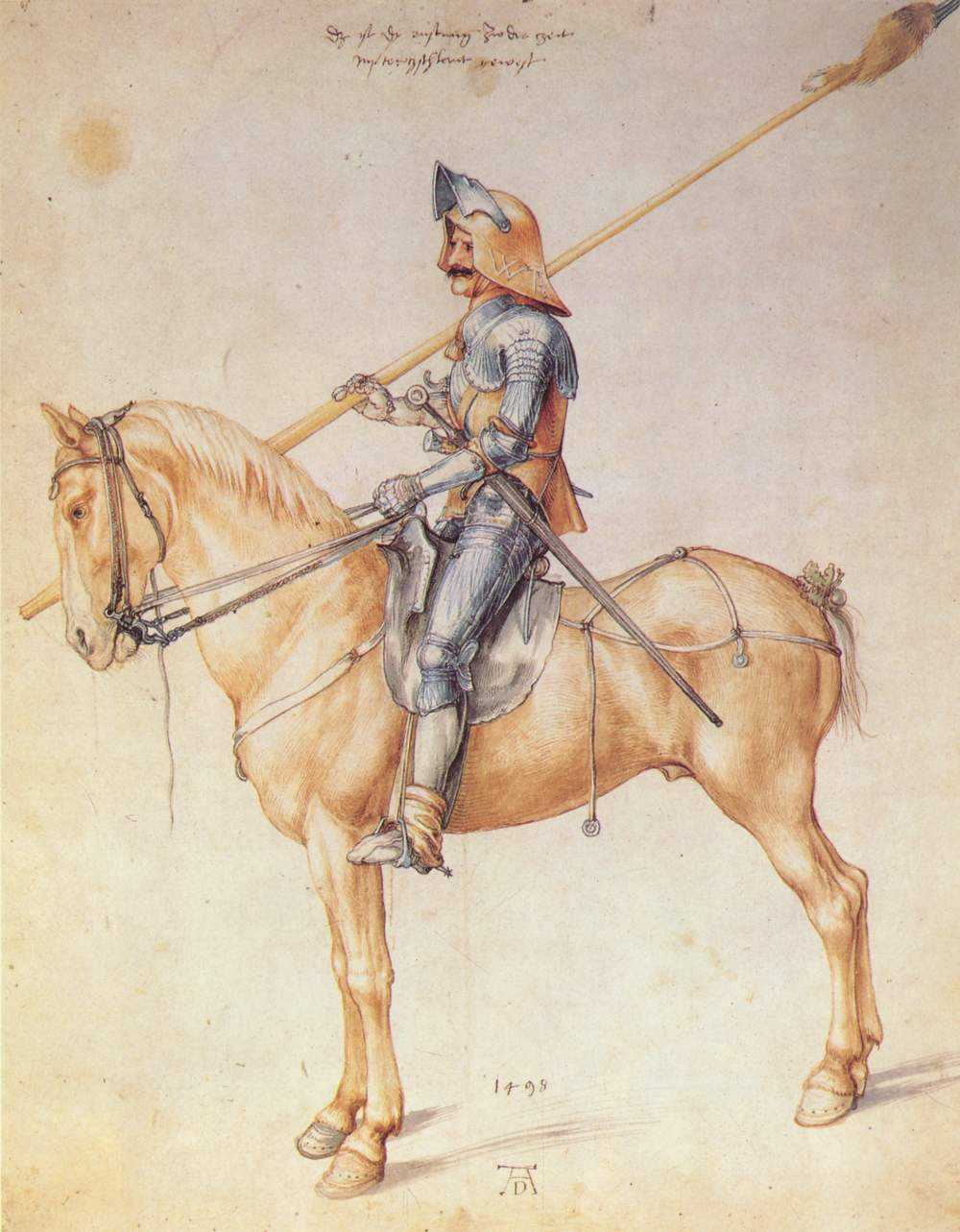
Полукопейщик demi-lancer или демилансер) — это тип тяжелого кавалериста, распространенный в Западной Европе в 16th и начале 17th веков.
Характеристики
"Demi-lancer" was a term used in 16th-century military parlance, especially in Англии, to designate cavalrymen mounted on unarmoured horses, armed with a slightly lighter version of the heavy копья of a или and wearing three-quarter or half-armour, in contrast to the full пластинчатой брони of the наплечники or gendarme, who rode на бронированных mounts. The Кираса (torso armour) and pauldrons (shoulder protection) of the demi-lancer were intended to be at least от пистолетного выстрела защищены. An open-faced helmet, such as the burgonet, was often worn in place of the fully-enclosed шлема. Armour for the leg and foot was replaced by long cuff-topped сапогами для верховой езды. In addition to the lance, the demi-lancer would have been armed with one or two с колесным замком or защелкивающимся замком, которые носили в pistols carried in на седле кобурах, and a мечом (including валлонские мечи and рапиры.)[1]
Demi-lancers were representative of the раннюю современную trend of reducing the coverage of armour, while increasing its thickness to provide protection for the vital areas against the projectiles of того-based огнестрельного оружия of the time, such as the аркебуза and, later, the мушкет. This abbreviated armour was also meant to increase the mobility of the men and horses, as well as reducing the expense of equipping and maintaining them throughout a long campaign.[1] In common with other 16th-century cavalrymen, demi-lancers were frequently used to нанесения ударов по флангу противника and to pursue отступающих troops.
Подбор персонала
Полукопейщики играли важную роль в английских войсках, сражавшихся в Голландской войне за независимость, и были мобилизованы в рамках обороны Англии от угрозы вторжения со стороны испанской Армады. In all 2,711 demi-lancers were raised in England in 1588, the year of the Armada.[2] Английские полукопейщики были сформированы с использованием системы «обученных отрядов» и из феодального ополчения, взимаемого с дворян и священнослужителей. [3]
Кончина
The demi-lancer was gradually replaced by similarly armoured cavalry whose primary armament were pistols; these cavalrymen were variously called пистолетчиками, кирасирами, or рейтерами. In addition, аркебузиры - cavalry with lighter armour using longer firearms, such as с ручным затвором карабины - began to appear on the battlefield. The trend towards the loss of the lance began in Германии in the mid-16th century; Франция had largely abandoned the lance by 1580, and England by 1600. The use of the heavy lance was still mentioned in military treatises up to the mid-17th century, but its actual use had died out well before that time.
Битва при Кутрасе (20 октября 1587 г.) между войсками Генриха Наваррского и роялистскими силами под командованием герцога де Жуайёза во время Французских религиозных войн illustrated the demise of the heavy lancer. Navarre's cavalry comprised 1,300 armoured pistoleers whilst the Royalists deployed 2,000 gendarmes. Within a few minutes of combat the Royalist lancers were routed, many being captured and held for ransom.[4] Только польские гусары continued to use a heavier type lance up to the late 18th century. The use of the lance required great skill and constant practice, whereas the use of pistols in battle was far less demanding. This is probably one factor behind the disappearance of the armoured lancer in Western Europe, another being the widespread adoption of the пехотных пик. Более лёгкие копья продолжали использоваться, особенно в Польше, России и на Балканах, до их возрождения в наполеоновскую эпоху.
Примечания
См. также
Ссылки
- Тинси, Дж. и Тернер, Г. (иллюстратор) (2002) Железнобокие: Английская кавалерия, 1588–1688 , издательство Osprey Publishing, ISBN 1-84176-213-X
- Oman, Sir Charles W. C. (reprinted 1998) History of the Art of War in the 16th Century, Greenhill Books. ISBN 0-947898-69-7
Источники
- Участники английской Википедии. «Demi-lancer». Перевод на русский. CC BY-SA 4.0 (текст и перевод).
Источники иллюстраций
- Carlos V en la Batalla de Mühlberg, por Tiziano.jpg · Titian · Общественное достояние
- Sebastiaan Vrancx - Kriegsbild.jpg · Sebastiaen Vrancx · Общественное достояние
- Duerer - Studie Reiter 1495.jpg · Albrecht Dürer · Общественное достояние


