
SL95
SL95 was a series of 32 низкопольных, сочлененных трамваев operated on the трамвайной линии Осло. The series was built by Italian rail manufacturer Ansaldo/Firema, later known as AnsaldoBreda (now Hitachi Rail Italy), and delivered between 1999 and 2004. Capacity for the eight-axle, three-section vehicles is 212 passengers, of which 88 can be seated. The name derives from being ordered in 1995. Original plans called for the delivery to be between 1997 and 1998. Delivery took many years due to a magnitude of technical flaws, including high noise levels, freezing during the winter and corrosion. The trams are 33.12 метра (108 ft 8 in) long, — 2.6 метра (8 ft 6 in) wide and 3.62 метра (11 ft 11 in) tall. The aluminum vehicles weigh 64.98 тонны (63.95 длинных тонны; 71.63 коротких тонны) and have a power output of 840 kilowatts (1,130 hp).
The trams operated on lines 13, 17 and 18. Due to their heavy weight and large turning radius they were unsuitable for the other lines. Prior to the introduction of the SL18, they were the only bi-directional trams in the fleet, and were therefore needed on lines 17 and 18 along the линии Уллевол-Хагебю. The trams cost about 20 миллионов kr each, but discounts were awarded after the delays and technical faults.
Трамвайные парки SL95 и SL79 постепенно выводились из эксплуатации в период с 2020 по 2025 год и заменялись новыми трамваями SL18, при этом SL95 был выведен из эксплуатации в апреле 2025 года, а SL79 — в сентябре 2025 года. [3][4]
Фон
В начале 1990-х годов компании Oslo Sporveier потребовались новые трамваи для работы на своей сети. За исключением 40 сочлененных трамваев SL79, поставленных в период с 1982 по 1990 год, компания имела несколько серий несочлененных трамваев с прицепами, построенных до 1960 года. Самая большая серия включала 13 трамваев SM53, 11 перестроенных SM83 и 28 прицепов, а также 34 трамвая SM91, приобретенных подержанными у трамвайной компании Гётеборга в 1991 году. [5] Компания Oslo Sporveier рассматривала несколько вариантов приобретения новых трамваев, включая заказ дополнительных SL79, покупку моторизованных прицепов для SL79, покупку новых низкопольных трамваев, покупку трамваев у ČKD Tatra, покупку 11 подержанных трамваев TT Class 8 из Тронхейма, перестройку SL79 с дополнительной секцией или покупку подержанных сочлененных трамваев за границей. Покупка подержанных материалов и перестройка SL79 были быстро отклонены. В январе 1991 года в Осло были проведены испытания несочлененного трамвая Tatra. [6]
Компания Oslo Sporveier ранее закупала все свои новые трамваи по индивидуальному заказу. Для заказа 1995 года компания хотела приобрести готовый трамвай. Компания долгое время рассматривала возможность покупки трамваев совместно с компанией Storstockholms Lokaltrafik, которой требовался новый подвижной состав для двух систем легкорельсового транспорта в Стокгольме, Швеция. Три существующих трамвая были протестированы в Осло в 1995 году, а несколько трамваев также были протестированы в Стокгольме. [7]
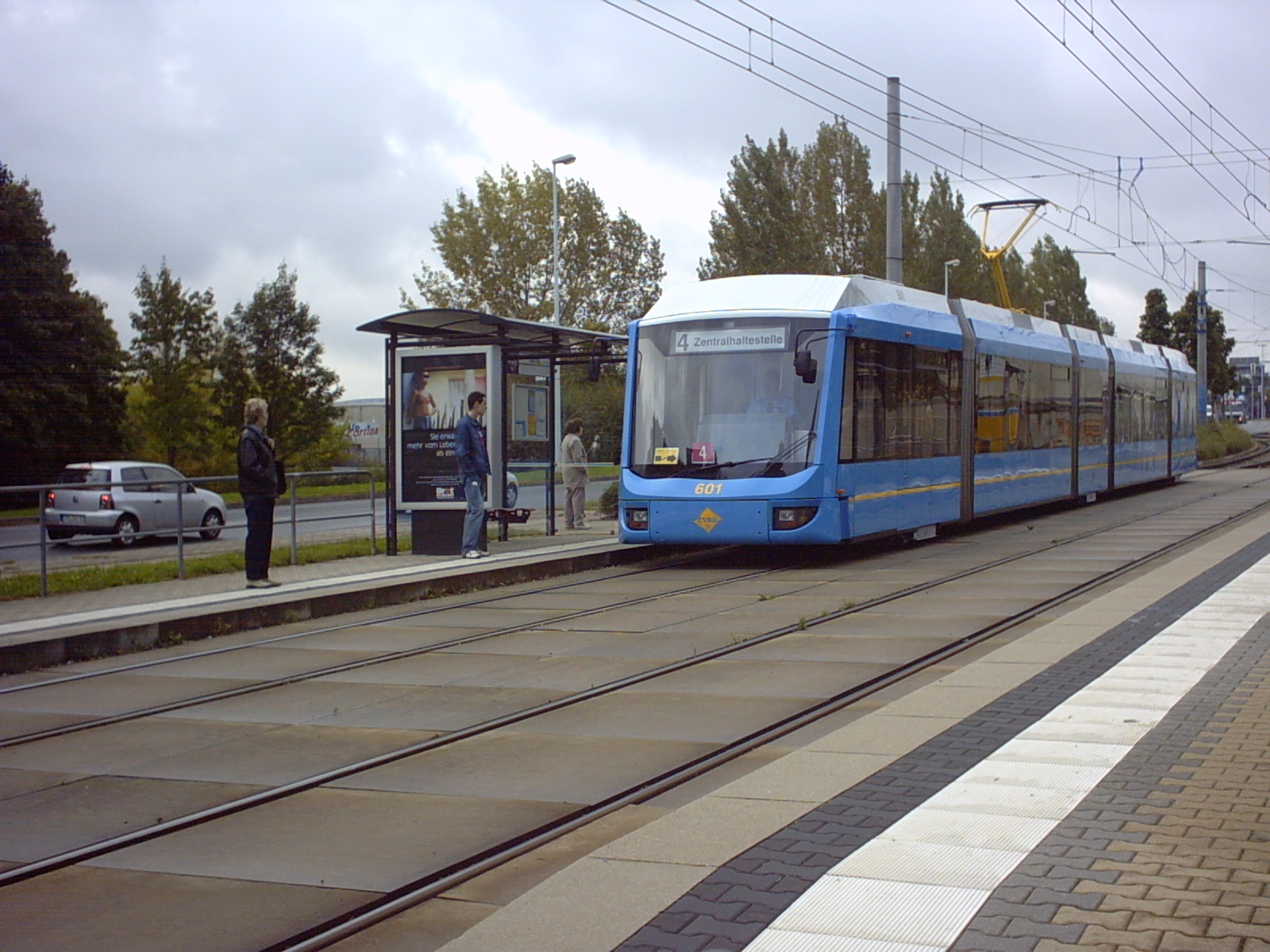
The first was a six-axle articulated tram from Касселя, Germany, with 80% low floor. The company disliked the lack of air suspension and a door construction where the doors went outwards. A трамвай Variotram built by ABB from the городской железной дороги Хемница was also tested. It has 100% low-floor, is 2.65 метра (8 ft 8 in) wide and also has outward-opening doors. The width made it unsuitable for stopping at some of the new stops. Oslo Sporveier stated that although the tram had many nice features, it was too experimental for their liking.[7] The final tested vehicle was a класса T LRV from the венской трамвайной сети. The six-axle vehicle was not well-adapted for the Oslo system, since it was built after German light rail standards with high platforms and 25 метров (82 ft 0 in) curve radius, and could not be operated on the линии Брискёбю and the loop at Яре on the линии Лиллеакер.[8]

Following the tests in Oslo, a delegation was sent to look at compatible systems outside Oslo. After it had returned, the company went into negotiations with three manufacturers: Duewag, Bautzen and Ansaldo/Firema. Oslo Sporveier signed a contract with Ansaldo/Firema for delivery of 17 units in 1997–98, with options for additional 15 units. The first 17 units cost 335 million kr, or NOK 20 million per vehicle.[8] The option rights were later exercised, and the total order was increased to 32.[9] This allowed Oslo Sporveier to replace all trams that were not articulated, and would give a maximum age in the tram fleet to 18 years.[10] While Oslo Sporveier at first had planned to debt-finance the purchase, by 1999 it was decided that the trams would be leased from Skandinaviska Enskilda Banken.[11] Due to a labor dispute about privatizing the operation of the tramway and the метро Осло, the ownership of all trams and metro trains, including the SL95, were transferred to the municipally owned limited company Oslo Vognselskap in 2007.[12]
Строительство и доставка
In January 1997, two bogies were installed and tested on a ST55-tram trailer.[13] On 10 February 1997, a mock-up of the driver's cab was made in Italy and sent to Oslo to try to optimize the layout. On 8 April 1997, Oslo Sporveier decided to order an additional 13 trams. The full options were not realized due to lack of funding. At the same time it was decided that all SM91, в то время как некоторые трамваи -trams would be retired, while some SM83-trams would remain in service after the full delivery of the SL95s.[14] By 1998, delivery date for the first vehicle, no. 141, was set to 23 May, with plans to put it into scheduled service on 23 June. The mock-up was scrapped on 12 February.[15] However, the tram was not completed until October, when representatives for the tram company could operate it for the first time at Firema's plant.[16] This delay was caused by the roof having blown off the plant. A NOK 1 million discount per tram was granted due to the incident.[17]
Трамвай № 141 прибыл в Осло 5 января 1999 года в трех частях. Их соединили вместе и протестировали в конце месяца на всей сети, перед поставкой трамвая № 142. Частота поставок была установлена каждые две недели. [18] В периоды с апреля по июнь напряжение на участках линии Лиллеакер было повышено с 600 до 750 В; это включало испытания с SL95, чтобы убедиться, что он может работать и при таком токе. [9]
Tram 141 was first used in scheduled traffic on 30 May, when it was put into service on the newly extended линии Уллевол-Хагебю. This line had been extended на 1.6 километра (0.99 mi) to Риксхоспиталет, where it would serve the new national hospital. Unlike all the other lines of the tramway, this конечном пункте does not have a разворотной петли, so only bidirectional trams can operate. SL95 was the only bidirectional tram in Oslo Sporveier's fleet. Delays in the delivery caused the line to terminate at площади Джона Коллета, where there is a turning loop.[18]
Tram 142 was first used in schedule service on 1 June 1999, and 143 was delivered to Oslo on 3 June. To be able to use the trams on the desired lines, Oslo Sporveier had to upgrade its infrastructure several places. The SL95 need a vertical curve radius of 500 metres (1,600 ft), requiring upgrades at Вессельс-пласс and Гамлебюен. The curves would also need to be fixed at Geita Bridge, but this was not done since the trams exceed the bridge's permitted load. The minimum permitted horizontal curve radius is 17 метров (55 ft 9 in), making it impossible for the trams to operate through the intersection between Riddervolds gate and Inkognitogata, where the radius is 16.5 метров (54 ft 2 in). This means the trams cannot operate on the линии Брискёбю, and all trams to Майорстуена are therefore operated with SL79. Restrictions on two trams passing was issued on several shorter sections, including the S-curve from Киркеристена to Сторторвета, but these sections were quickly rebuilt.[11]
К 2000 году поставки были задержаны, а в июне все трамваи были выведены из эксплуатации на три недели для модификации редукторов. [19] В октябре десять из тринадцати трамваев были выведены из эксплуатации из-за радиального биения. Проблема была настолько серьезной, что некоторым трамваям на следующий день после ремонта было заменено радиальное биение. [20] С 6 января 2001 года SL95 можно было использовать на линии Грюнерлёкка–Торшов, а с 6 февраля — на линии Экеберг. Однако на последней платформах по-прежнему были слишком короткие. [21]
Эксплуатация оказалась сопряжена с рядом серьезных трудностей, и к марту 2001 года компания Oslo Sporveier угрожала расторгнуть договор купли-продажи, если производитель — который к тому времени объединился с AnsaldoBreda — не устранит проблемы. К ним относились шум, превышающий допустимый уровень на 15 дБ, и вывод трамваев из эксплуатации во время январско-февральских холодов, когда батареи и выпрямители не работали. [22] Было согласовано, что AnsaldoBreda должна будет заменить все 256 двигателей, чтобы выполнить условия контракта. К 1 июня AnsaldoBreda поставила один трамвай, который соответствовал всем условиям контракта. Трамвай № 155 к тому времени еще не был поставлен и использовался производителем для испытаний. В то же время трамвай № 149 использовался для испытаний в Осло. [23] Трамваи были выведены из эксплуатации и постепенно возвращены в строй по мере их модернизации. [24] В феврале 2002 года трамвай № 155 был оснащен новыми двигателями, и было заключено новое соглашение, согласно которому все двигатели должны были быть заменены к декабрю 2003 года, если компания Oslo Sporveier будет удовлетворена шестимесячными испытаниями трамвая № 155. [25]
The last day with SM91 in service was on 1 November 2002. By then, 27 of the SL95-trams had been delivered, and Oslo Sporveier was able to operate its entire network with only articulated trams.[26] Until 2003, trams 142 and 149 were not in service for long-term repairs.[27] On 8 July 2004, a computer error caused tram 161 neither to be able to run nor open the doors, even with the emergency system. This was caused by the computer indicating that the tram was running at 12.5 километров в час (7.8 mph) while it stood still. All trams were later altered so the motorman could override such incidents. The final trams were delivered in 2004, and no. 142 was put into service in January 2005. At the same time, коррозия. was discovered inside the articulation of tram 141.[28] In 2006, Oslo Sporveier introduced a program to upgrade all the SL95-trams, including removing corrosion from the bodywork and the inside, as well as simplifying the lubrication of the joints, which prior to the upgrades required the entire trams to be de-hooked. These upgrades are planned to be completed by 2009.[29] The trams have also had problems with the air supply freezing during cold spells, making it impossible to retract the side mirrors when changing direction, and terminating the secondary suspension. This requires the trams to be operated at walking speed without passengers[clarification needed].[30]
Технические характеристики

SL95 is a bidirectional, eight-axle articulated tram built exclusively for the Oslo Tramway by Ansaldo of Italy. The tram has three sections, with one bogie on the first and last section and two bogies on the center section. The body is in aluminum, with sections that are welded along the floor and roof, and bolted on the side, to ease replacement of dented sections. The trams are 33.12 метра (108 ft 8 in) long, — 2.6 метра (8 ft 6 in) wide and 3.62 метра (11 ft 11 in) tall. The axle distance in the bogies is 1.80 метра (5 ft 11 in), and the distance between the bogie centers is 9.85 метра (32 ft 4 in) from the center to the end, and 5.17 метра (17 ft 0 in) between the two in the center. The tram weighs 64.2 тонны (63.2 длинных тонны; 70.8 коротких тонны) empty, and 78.3 тонны (77.1 длинных тонны; 86.3 коротких тонны) with payload.[31]
Each of the four bogies have two трехфазными асинхронными motors on a steel bogie with two axles. The wheels have a 680 миллиметров (27 in) diameter when new and 610 миллиметров (24 in) when fully worn. The axles are подвешены на резиновых опорах against the bogies, while the bogies are пневматической подвеске against the chassis. The motors are type MTA-F6-105V built by Ansaldo, and each motor outputs 105 киловатт (141 hp) at 750 В постоянного тока. This allows a maximum speed of 80 километров в час (50 mph) and an acceleration of 1.5 m/s/s (3.4 mph/s). The vehicle can be reversed, but the speed is then automatically limited to 15 километров в час (9.3 mph).[31][1][2] While the tram operated with 600 V, it had power output of 672 киловатта (901 hp).[32]

The vehicles have three braking systems: a primary рекуперативный динамический тормоз, a secondary дисковый тормоз and an emergency рельсовый тормоз. When braking with the regenerative brake, the energy can be fed back to the overhead wires. The trams are dimensioned to operate an entire day with the dynamic brakes disconnected from one bogie, and for one hour if disconnected from two bogies, in which case only disc brakes will be used.[32] The trams are bidirectional, with a driver's cab at each end. These cabs are built so the машинист can also sell tickets. The cab's have a door to close them off, so the riders cannot access rear cab. There are four doors on both sides; the front door is single while the three back doors are double. In addition to the front door, there is one door in each section. To operate the doors on the left side, the motorman must engage a security switch. It is also possible to open each individual door on the right side from the driver's cab. Half the length is low-floor, with an entry height at 350 миллиметров (14 in), including three of the four doors. There are 88 seats, of which 64 are on the high-floor section, giving a total capacity of 212 riders.[32] All of the rollsigns was replaced with LED signs, similar to SL79 in 2019.
Операция
До введения SL18 трамваи SL95 составляли 32 из 72 трамваев в системе, дополняя более старые SL79. Трамваи SL95 были единственными двунаправленными трамваями, и, следовательно, единственными, которые могли работать на линии Уллевол-Хагебю, обслуживаемой линиями 17 и 18. Поскольку линия 13 является продолжением линии 17 в Синсене, трамваи SL95 также работали на этой линии. Из-за малого радиуса поворота на линии Брискбю трамваи SL95 редко доезжали до Майорстуена [32], а когда доезжали, использовали линию Фрогнер и/или линию Хомансбюен ; на повороте возле остановки Инкогнитогата на линии Брискбю установлен знак, предупреждающий водителей о необходимости соблюдать осторожность с трамваями SL95. Трамваи курсировали по линиям Уллевол-Хагеби-, Экеберг-, Зинсен-, Грюнерлокка-Торшов-, Лиллеакер- Скойен и редко по линиям Хомансбюен - Фрогнер. Интервал каждой службы составляет десять минут, что дает пятиминутный интервал на участках, обслуживаемых двумя линиями. [33]
В 2007 году [34][35] два трамвая попали в аварию и были отправлены в компанию Firema на ремонт. Однако компания объявила о банкротстве, и по состоянию на октябрь 2010 года трамваи так и не были отремонтированы или возвращены в Осло. [36] В 2010 году комиссар по вопросам окружающей среды и транспорта Йоран Каллмир ( Партия прогресса ) заявил, что трамваи SL95 рассматриваются для замены одновременно с гораздо более старыми SL79. Проблемы с этими машинами включали чрезмерный шум, чрезмерное время простоя, ржавчину, трещины на осях и повышенный износ инфраструктуры из-за их большого веса. [37] Все трамваи SL95, кроме двух, были временно выведены из эксплуатации 29 апреля 2013 года, когда было обнаружено, что ржавчина повредила соединения между сочлененными секциями на нескольких трамваях. [38]
From 2012, the trams were equipped with an автоматической системой защиты поезда system, which allowed them to run concurrently with the поездами метро on the линии Кольсос.[39] Oslo Vognselskap announced in September 2012 that they were preparing a tender to receive bids for new trams, which would replace all SL79 and SL95 units. In addition to procuring about seventy new units, Ruter initiated plans to upgrade the tramways for a combined NOK 4 billion. Oslo Vognselskap stated that the replacement trams would be about the same size as SL95, but weigh only 40 тонн (39 длинных тонн; 44 коротких тонны), giving less wear on the tracks, and have a floor height of 30 сантиметров (12 in). Replacements of the trams started in October 2020 when the new SL18 trams were first delivered and were completed by April 2025 when all 87 new trams are delivered. Older SL79 trams remained in service until September 2025 but were eventually replaced by the new trams.[40][3][41]
Примечания
- ↑ Only used between Лиллеакером and Беккестуа on Лиллеакер/ линии
Ссылки
- 1 2 3 AnsaldoBreda. "Oslo LRV" (PDF) . Заархивировано с оригинала (PDF) 18 октября 2010 г. Получено 18 октября 2010 г.
- 1 2 3 4 Ruter. "Leddtrikk SL 95" (in Norwegian). Archived from оригинала on 15 June 2008. Retrieved 18 октября 2010.
- 1 2 «Новые трамваи Осло: Si hei til SL18! (Новые трамваи Осло: поздоровайтесь с SL18!)». Fremtidens Byreise (in Norwegian). Archived from оригинала on 12 June 2018. Retrieved 11 июня 2018.
- ↑ Ekroll, Henning Carr (30 October 2025). «Ее кнусы Осло-триккен». Aftenposten. Retrieved 23 февраля 2026.
- ↑ Andersen, Bjørn (1996). "Oslo Sporveiers vognpark pr. 1 January 1997". Lokaltrafikk (in Norwegian). 27: 29.
- ↑ Belsaas, Baard (1990). "Sporvognsdivisjonen fornyer". Lokaltrafikk (in Norwegian). 9: 12–14.
- 1 2 Andersen, Bjørn (1995). "Lavgulvtrikkene kommer". Lokaltrafikk (in Norwegian). 24: 4–9.
- 1 2 "SL95, siste nytt". Lokaltrafikk (in Norwegian). 25: 31. 1995.
- 1 2 Myhre, Knut (1998). "Første SL 95". Lokaltrafikk (in Norwegian). 40: 26–27.
- ↑ Andersen, Bjørn (1998). "Kun leddvogner i drift". Lokaltrafikk (in Norwegian). 40: 29.
- 1 2 Andersen, Bjørn (1999). "SL95". Lokaltrafikk (in Norwegian). 40: 27.
- ↑ Ensby, Anne Linn (22 November 2006). "T-baneprivatisering utsatt". Норвежская телерадиовещательная корпорация (in Norwegian). Retrieved 21 марта 2012.
{{cite web}}: CS1 обслуживание: устаревшая служба архивирования ( ссылка) - ↑ Andersen, Bjørn (1996). "SL95". Lokaltrafikk (in Norwegian). 30: 33.
- ↑ Andersen, Bjørn (1997). "SL95". Lokaltrafikk (in Norwegian). 32: 24.
- ↑ Andersen, Bjørn (1998). "SL95". Lokaltrafikk (in Norwegian). 35: 24.
- ↑ Andersen, Bjørn (1998). "Første SL 95". Lokaltrafikk (in Norwegian). 38: 24.
- ↑ Andersen, Bjørn (1998). "Første SL 95". Lokaltrafikk (in Norwegian). 37: 31.
- 1 2 Andersen, Bjørn (1999). "Gaustadlinjen åpnet". Lokaltrafikk (in Norwegian). 40: 24.
- ↑ Gaarder, Håken Kinck (2001). "SL95". Lokaltrafikk (in Norwegian). 43: 30.
- ↑ Gaarder, Håken Kinck (2001). "Høsten 2000". Lokaltrafikk (in Norwegian). 43: 30.
- ↑ Andersen, Bjørn (2001). "Kjøreforbud". Lokaltrafikk (in Norwegian). 44: 39.
- ↑ Gaarder, Håkon Kinck (2001). "SL95". Lokaltrafikk (in Norwegian). 44: 38.
- ↑ Gaarder, Håkon Kinck (2001). "SL95". Lokaltrafikk (in Norwegian). 45: 34–35.
- ↑ Blix, Håvard (2001). "SL95". Lokaltrafikk (in Norwegian). 46: 38.
- ↑ Blix, Håvard (2001). "SL95". Lokaltrafikk (in Norwegian). 47: 41–42.
- ↑ Blix, Håvard (2002). "1. November". Lokaltrafikk (in Norwegian). 50: 41–42.
- ↑ Blix, Håvard (2003). "SL95". Lokaltrafikk (in Norwegian). 52: 41–42.
- ↑ "SL95". Lokaltrafikk (in Norwegian). 57: 42. 2004.
- ↑ "SL95". Lokaltrafikk (in Norwegian). 63: 30. 2007.
- ↑ Udbjørg, Peder (2009). "SL95". Lokaltrafikk (in Norwegian). 71: 31.
- 1 2 Andersen, Bjørn (2000). "SL95, en presentasjon". Lokaltrafikk (in Norwegian). 43: 4–10.
- 1 2 3 4 Backer, Henrik B. and Arild Wold (1997). "SL95, en presentasjon". Локальтрафикк. 31: 22–23.
- ↑ Рутер (2009). "Rutehefte Trikk" (PDF). Archived from оригинала (PDF) on 8 April 2010. Retrieved 25 августа 2009.
- ↑ «Доклад о встрече, связанной с поездкой, 21 ноября 2007 г.». Совет по расследованию несчастных случаев Норвегии (in Norwegian and English). 27 November 2008. Archived from оригинала on 29 September 2011. Retrieved 8 июля 2011.
- ↑ Trellevik, Amund (21 November 2007). «Триккер коллидерте». Афтенпостен (in Norwegian). Архивировано from the original on 28 June 2011. Retrieved 21 марта 2012.
- ↑ Hansen, Asle (25 September 2010). «Осло — это неправильное решение для sine nyeste trikkevogner». Дагбладет (in Norwegian). Архивировано from the original on 11 October 2012. Retrieved 21 марта 2012.
- ↑ Baraldsnes, Ronnie (23 September 2010). «Новый запах миллиарда для Осло-trafikken». ТВ 2 (in Norwegian). Архивировано from the original on 28 September 2010. Retrieved 18 октября 2010.
- ↑ «Осло-триккер скаль тильбаке по скиннене» (in Norwegian). 30 April 2013: Dagens Næringsliv/NTB. Retrieved 1 мая 2013.
{{cite news}}: CS1 обслуживание: местоположение ( ссылка) - ↑ Seehusen, Joachim (20 March 2012). «Сколько можно нажать на Т-банелинье». Teknisk Ukeblad (in Norwegian). Архивировано from the original on 23 March 2012. Retrieved 21 марта 2012.
- ↑ Valmot, Odd Richard (24 September 2012). «Ослотриккен скаль форнес». Teknisk Ukeblad (in Norwegian). Архивировано from the original on 30 September 2012. Retrieved 29 сентября 2012.
- ↑ Eggesvik, Olav; Mellingsæter, Hanne. «Осло skal kjøpe 87 Spania-trikker til mer enn fire миллиардер (Осло закупит 87 испанских трамваев на сумму более 4 миллиардов норвежских крон)». Афтенпостен (in Norwegian). Retrieved 11 июня 2018.


Источники
- Участники английской Википедии. «SL95». Перевод на русский. CC BY-SA 4.0 (текст и перевод).
Источники иллюстраций
- SL95-143 v Ovre Slottsgate.jpg · Taara001 · CC BY 4.0
- 1-Variobahn Chemnitz.jpg · Olaf Just ( Ollivius at German Wikipedia ) · CC BY-SA 3.0
- Trikk John Colletts plass.JPG · Mr. Kjetil Ree · CC BY-SA 3.0
- SL95 Kolsåsbanen 1.jpg · Лицензия файла уточняется
- SL95 Bekkestua.jpg · Лицензия файла уточняется
- Two SL95 at Rikshospitalet.jpg · Лицензия файла уточняется
- SL79 and SL95 in Storgata.jpg · Лицензия файла уточняется
- SL95 interior.jpg · Punkmorten · Общественное достояние
- I12 025 Hp Abbediengen, ET 145.jpg · Falk2 · CC BY-SA 3.0
- SL95 roof Kirkeristen.jpg · Лицензия файла уточняется
- Commons-logo.svg · Лицензия файла уточняется (Wikimedia Commons logo)
- NO road sign 513.svg · Peter J. Acklam converted the original EPS file to PDF with Ghostscript’s ps2pdf utility and the PDF file to SVG with Inkscape . · Общественное достояние
- Oslo Tramway new 11.svg · Arsenikk · Общественное достояние
- Oslo Tramway new 13.svg · Arsenikk · Общественное достояние
- Oslo Tramway new 19.svg · Arsenikk · Общественное достояние
- Oslo Tramway new 12.svg · Arsenikk · Общественное достояние
- Oslo Tramway new 18.svg · Arsenikk · Общественное достояние
- Oslo Tramway new 17.svg · Arsenikk · Общественное достояние


