
Цистерна

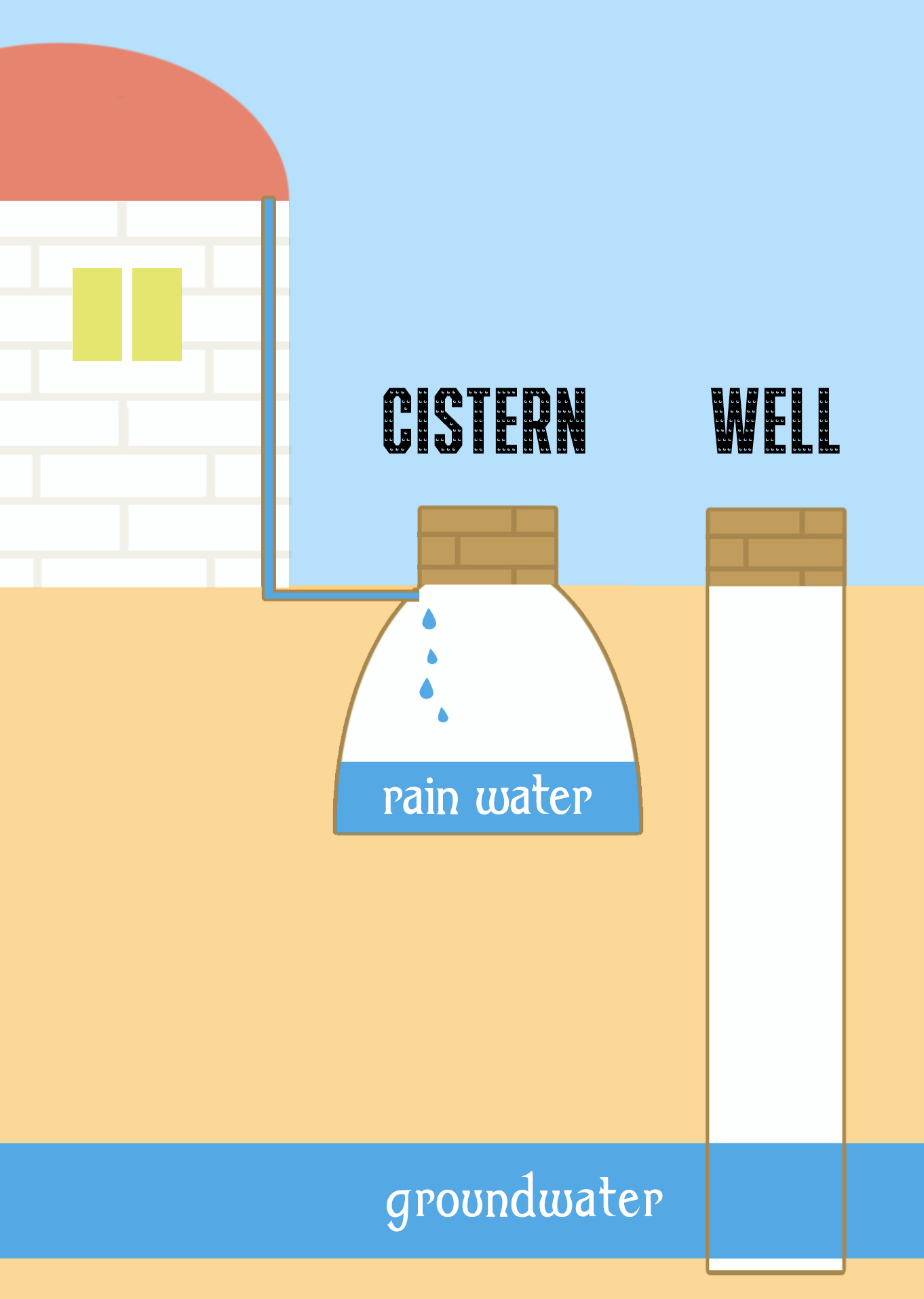
A ) — это водонепроницаемый сосуд для хранения жидкостей, обычно воды. Цистерны (от Middle English cisterne; от Latin cisterna, от cista 'box'; от Ancient Greek κίστη (kístē) 'basket'[1]) is a waterproof receptacle for holding liquids, usually water. Cisterns are often built to catch and хранения дождевой воды.[2] To prevent leakage, the interior of the cistern is often lined with hydraulic plaster.[3]
Цистерны отличаются от колодцев водонепроницаемой облицовкой. Современные цистерны имеют объем от нескольких литров до тысяч кубических метров, фактически представляя собой закрытые резервуары. [4]
Происхождение
Раннее использование в быту и сельском хозяйстве


Водонепроницаемые известковые цистерны в полах домов являются характерной чертой неолитических поселений Леванта , например, в Рамаде и Лебве [5], а также в конце четвертого тысячелетия до н.э. в Джаве на северо-востоке Ливана. Цистерны являются важными элементами новых методов управления водными ресурсами в засушливых земледельческих общинах [6]
Ранние примеры древних цистерн, найденных в Израиле, включают значительную находку в Тель-Хазоре, где большая цистерна была высечена в скальной породе под дворцом, датируемым поздним бронзовым веком. Подобные системы были обнаружены в Таанахе. В железном веке подземные системы водоснабжения строились в царских центрах и поселениях по всему древнему Израилю, что является одним из самых ранних примеров инженерной деятельности в городском планировании. [7]
The имплувий ним, a standard feature of the - дома, обычно имел под собой цистерну. Имплувий и связанные с house, generally had a cistern underneath. The impluvium and associated structures collected, filtered, cooled, and stored the water, and also cooled and ventilated the house.
Цистерны замка

In the Middle Ages, cisterns were often constructed in замках на холмах in Europe, especially where колодцы . Существовали два типа: резервуарные цистерны и фильтрационные цистерны. Такая фильтрационная цистерна была построена в could not be dug deeply enough. There were two types: the tank cistern and the filter cistern. Such a filter cistern was built at the Ригерсбурге in Austrian Штирии, where a cistern was hewn out of the вулканической rock. Rain water passed through a песчаный фильтр and collected in the cistern. The filter cleaned the rain water and enriched it with minerals.[citation needed]
Современное использование

Цистерны широко распространены в районах, где вода является дефицитным ресурсом, либо из-за ее редкости, либо из-за истощения запасов вследствие интенсивного использования. Исторически вода использовалась для приготовления пищи, орошения и мытья. [8] В настоящее время цистерны часто используются только для орошения из-за опасений по поводу качества воды. Сегодня цистерны также могут быть оснащены фильтрами или другими методами очистки воды, если вода предназначена для потребления. Нередко цистерна бывает открытой, чтобы собирать дождевую воду или включать более сложные системы сбора дождевой воды. В таких случаях важно иметь систему, которая не оставляет воду открытой для водорослей или комаров, которые привлекаются к воде и потенциально переносят болезни находящимся поблизости людям. [9]
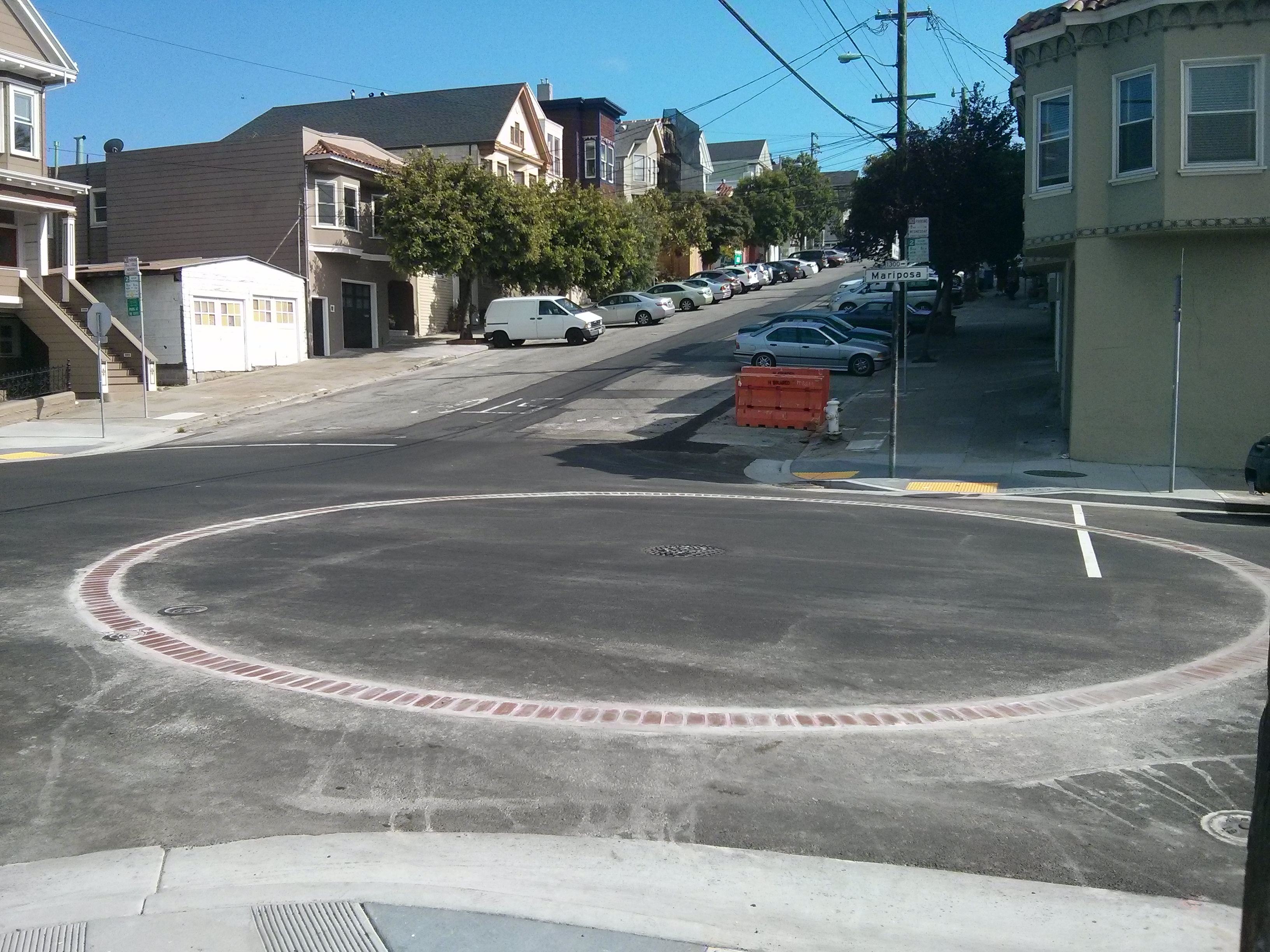
One particularly unique modern utilization of cisterns is found in Сан-Франциско, which has historically been subject to разрушительных пожаров. As a precautionary measure, in 1850, funds were allocated to construct over 100 cisterns across the city to be utilized in case of fire.[10] The city's firefighting network, the Вспомогательная система водоснабжения (AWSS) maintains a network of 177 independent underground water cisterns, with sizes varying from 75,000 US gallons (280 kL) to over 200,000 US gallons (760 kL) depending on location, with a total storage capacity of over 11,000,000 US gallons (42 ML).[11] These cisterns are easily spotted at street level with manholes labeled CISTERN S.F.F.D surrounded by red brick circles or rectangles. The cisterns are completely separate from the rest of the city's water supply, ensuring that in the event of an earthquake, additional backup is available regardless of the condition of the city's mainline water system.[12]
Some cisterns sit on the top of houses or on the ground higher than the house, and supply the running water needs for the house. They are often supplied by колодцев with электрическими насосами, or are filled manually or by truck delivery, rather than by rainwater collection. Very common throughout Brazil, for example, they were traditionally made of concrete walls (much like the houses themselves), with a similar concrete top (about 5 cm or 2 дюйма thick), with a piece that can be removed for water filling and then reinserted to keep out мусора and insects. Modern cisterns are manufactured out of plastic (in Brazil with a characteristic bright blue color, round, in capacities of 10 to 50 kilolitres (2,600 to 13,200 US gal). These cisterns differ from резервуаров для воды in the sense that they are not entirely enclosed and sealed, they have a lid made of the same material as the cistern, which is removable by the user.[citation needed]
To keep a clean water supply, the cistern must be kept clean. It is important to inspect them regularly, keep them well enclosed, and to occasionally empty and clean them with a proper dilution of хлора and to rinse them well. Well water must be inspected for contaminants coming from the ground source. City water has up to 1ppm (parts per million) chlorine added to the water to keep it clean. If there is any question about the water supply at any point (source to tap), then the cistern water should not be used for drinking or cooking. If it is of acceptable quality and consistency, then it can be used for (1) уборки, and housecleaning; (2) showers and handwashing; (3) washing dishes, with proper sanitation methods,[13] and for the highest quality, (4) cooking and drinking. Water of non-acceptable quality for the aforementioned uses may still be used for irrigation. If it is free of particulates but not low enough in бактерий, then boiling may also be an effective method to prepare the water for drinking.[citation needed]
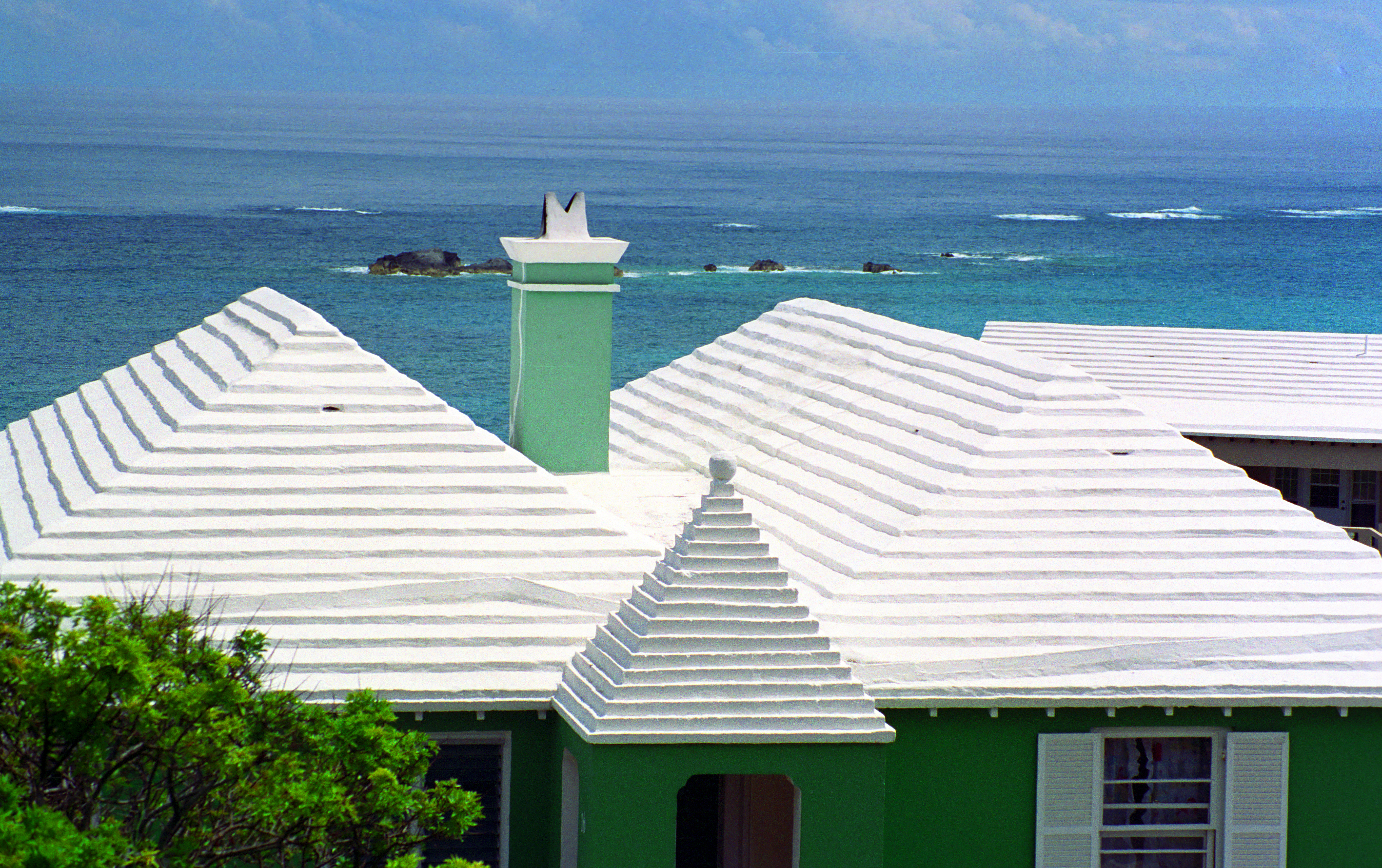
Many теплицы rely on a cistern to help meet their water needs, particularly in the United States. Some countries or regions, such as Фландрия, Bermuda and the U.S. Virgin Islands, have strict laws requiring сбора дождевой воды systems be built with any new construction, and cisterns can be used in these cases. In Bermuda, for example, its familiar white-stepped roofs are part of the rainwater collection system, water is channeled by roof gutters to below-ground cisterns.[14] Other countries, such as Japan, Germany, and Spain, also offer financial incentives or tax credit for installing cisterns.[15] Cisterns may also be used to store water for тушения пожаров in areas where there is an inadequate водоснабжением. The city of Сан-Франциско, notably, maintains fire cisterns under its streets in case the primary water supply is disrupted. In many flat areas, the use of cisterns is encouraged to absorb excess rainwater which otherwise can overload sewage or drainage systems by heavy rains (certainly in urban areas where a lot of ground is surfaced and doesn't let the ground absorb water).[citation needed]
Купание
In some Юго-Восточной Азии, countries such as Малайзия and Индонезия, showers are traditionally taken by pouring water over one's body with a dipper (this practice comes from before водопровод was common). Many bathrooms even in modern houses are constructed with a small cistern to hold water for bathing by this method.[citation needed]
Бачки для унитазов

1. поплавок, 2. заливной клапан, 3. рычаг, 4. трубка наполнения бачка, 5. трубка наполнения чаши, 6. заслонка смывного клапана, 7. переливная трубка, 8. ручка смыва, 9. цепочка, 10. заливная линия, 11. вал заливного клапана, 12. трубка смыва.


The modern унитаз utilises a cistern to reserve and hold the correct amount of water required to flush the toilet bowl. In earlier toilets, the cistern was located high above the toilet bowl and connected to it by a long pipe. It was necessary to pull a hanging chain connected to a release valve located inside the cistern in order to flush the toilet. Modern toilets may be с, with the cistern mounted directly on the toilet bowl and no intermediate pipe. In this arrangement, the flush mechanism (lever or push button) is usually mounted on the cistern. Concealed cistern toilets, where the cistern is built into the wall behind the toilet, are also available. A flushing trough is a type of cistern used to serve more than one WC pan at one time. These cisterns are becoming less common, however. The cistern was the genesis of the modern биде.[citation needed]
В начале цикла смыва, когда уровень воды в бачке унитаза падает, заслонка сливного клапана опускается обратно на дно, перекрывая основной поток воды в сливную трубу. Поскольку уровень воды в бачке еще не достиг отметки заполнения, вода продолжает течь из бачка и труб наполнения чаши. Когда уровень воды снова достигнет отметки заполнения, поплавок освободит вал сливного клапана, и поток воды прекратится.
Программа «Один миллион цистерн»
На северо-востоке Бразилии программа «Один миллион цистерн» ( Programa 1 Milhão de Cisternas или P1MC ) помогла местному населению в управлении водными ресурсами. Правительство Бразилии приняло эту новую политику сбора дождевой воды в 2013 году. [16] Организация Semi-Arid Articulation (ASA) оказывает управленческую и технологическую поддержку в создании многослойных цементных контейнеров, называемых цистернами, для сбора и хранения дождевой воды для мелких фермеров в 34 территориях девяти штатов, где работает ASA ( Минас-Жерайс, Баия, Сержипе, Алагоас, Пернамбуку, Параиба, Рио-Гранде-ду-Норте, Сеара и Пиауи ). [17]
Дождевая вода, падающая с крыш, направляется по трубопроводам или водостокам и хранится в цистерне. [18] The cistern is covered with a lid to avoid evaporation. Each cistern has a capacity of 16,000 liters. Water collected in it during 3–4 months of the rainy season can sustain the requirement for drinking, cooking, and other basic sanitation purposes for rest of the dry periods. By 2016, 1.2 million rainwater harvesting cisterns were implemented for human consumption alone.[19] После положительных результатов программы P1MC правительство запустило еще одну программу под названием «Одна земля, две воды» (Uma Terra, Duas Águas, P1 + 2), которая предоставляет фермеру еще одну цистерну для поддержки сельскохозяйственного производства. [20]
Примечательные примеры
- Цистерна Базилика в Стамбуле, Турция
- Aljibe of the Паласио-де-лас-Велетас in Касересе, Испания
- Португальская цистерна (Мазаган) в Эль-Джадиде, Марокко
- Цистерна в Силвеше, Португалия
- Матера, южная Италия
- Аса Иудейский построил колодец. Позже в него был брошен пророк Иеремия после того, как предсказал вавилонское вторжение.
- Цистерна в Бытие 37:20, 22
Галерея


См. также
Ссылки
- ↑ "цистерна". Новый университетский словарь Вебстера (9-е изд.). 1990.
- ↑ "Цистерны". Национальное географическое общество.
- ↑ Reich, Ronny; Katzenstein, Hannah (1992). "Glossary of Archaeological Terms". In Kempinski, Aharon; Reich, Ronny (eds.). Архитектура Древнего Израиля. Jerusalem: Israel Exploration Society. p. 312. ISBN 978-965-221-013-5.
- ↑ «Проект цистерны» (PDF). Департамент сельского хозяйства и защиты прав потребителей Северной Каролины . Retrieved 2020-04-13.
- ↑ Robert, Miller (1980). "Water use in Syria and Palestine from the Neolithic to the Bronze Age". Мировая археология. 11 (3): 331–341. doi:10.1080/00438243.1980.9979771. JSTOR 124254.
- ↑ Roberts, N. (1977). "Water conservation in ancient Arabia". Труды семинара по арабским исследованиям. 7: 134–46. JSTOR 41223308.
- ↑ Shiloh, Yigal (1992). "Underground Water Systems in the Land of Israel in the Iron Age". In Kempinski, Aharon; Reich, Ronny (eds.). Архитектура Древнего Израиля. Jerusalem: Israel Exploration Society. p. 275. ISBN 978-965-221-013-5.
- ↑ Mays, Larry; Antoniou, George; Ангелакис, Андреас (2013). «История водонапорных цистерн: наследие и уроки». Вода. 5 (4): 1916–1940. Bibcode:2013Water...5.1916M. doi:10.3390/w5041916. hdl:2286/R.I.43114.
- ↑ al-Kibsi, Huda (2007-09-29). «Йемен по-новому взглянул на цистерны». Yemen Observer. Archived from the original on 2012-02-08. Retrieved 2020-05-11.
- ↑ "ЦИСТЕРНЫ - FoundSF". www.foundsf.org. Retrieved 2024-08-08.
- ↑ King, Jason (2017-12-06). «Скрытые резервуары для воды в Сан-Франциско». Скрытая гидрология . Retrieved 2024-08-08.
- ↑ «Золотое наследие маленького пожарного гидранта Сан-Франциско, который смог». FireRescue1. 2021-05-30. Retrieved 2024-08-08.
- ↑ "Naturnaher Umgang mit Regenwasser" (PDF). Bayerisches Landesamt für Umwelt LfU (in German). Retrieved 2020-04-12.
- ↑ Low, Harry (23 December 2016). «Почему дома на Бермудах имеют белые ступенчатые крыши». BBC News. Retrieved 30 августа 2019.
- ↑ Scheidewig. "Geld sparen durch Zisternennutzung". Гартен-Цистернен (in German). Retrieved 2020-04-13.
- ↑ Lindoso, D.P.; Eiró, F.; Bursztyn, M.; Rodrigues-Filho, S.; Nasuti, S. (2018). «Сбор воды для жизни в условиях засухи: выводы из бразильского подхода к сосуществованию человека в условиях полузасушливости для достижения Целей устойчивого развития». Устойчивость. 10 (3): 622. Bibcode:2018Sust...10..622L. doi:10.3390/su10030622. hdl:2066/183903.
- ↑ Pragana, Verônica (2017-12-29). «Доступ к воде для производства расширен для большего количества 6,8 миллионов семей в полушарии». IRPAA — Региональный институт агропекуарии.
- ↑ Lindoso, D.P.; Eiró, F.; Bursztyn, M.; Rodrigues-Filho, S.; Nasuti, S. (2018). «Сбор воды для жизни в условиях засухи: выводы из бразильского подхода к сосуществованию человека в условиях полузасушливости для достижения Целей устойчивого развития». Устойчивость. 10 (3): 622. Bibcode:2018Sust...10..622L. doi:10.3390/su10030622. hdl:2066/183903.
- ↑ "Programa Cisternas democratiza acesso à água no Semiárido". Правительство Бразилии. 2016.
- ↑ Lindoso, D.P.; Eiró, F.; Bursztyn, M.; Rodrigues-Filho, S.; Nasuti, S. (2018). «Сбор воды для жизни в условиях засухи: выводы из бразильского подхода к сосуществованию человека в условиях полузасушливости для достижения Целей устойчивого развития». Устойчивость. 10 (3): 622. Bibcode:2018Sust...10..622L. doi:10.3390/su10030622. hdl:2066/183903.
Внешние ссылки
[19] СМИ, связанные с Cisterns на Викимедиа Коммонс
- Old House Web - Исторические проекты по сохранению водных ресурсов.
Источники
- Участники английской Википедии. «Cistern». Перевод на русский. CC BY-SA 4.0 (текст и перевод).
Источники иллюстраций
- El Jadida cistern.jpg · Axel Rouvin from Bordeaux, France · CC BY 2.0
- Well-cistern.jpg · תמר הירדני Tamar Hayardeni · CC BY-SA 4.0
- Cistern in the Mission District, San Francisco, California.jpg · Robin Scheswohl · Общественное достояние
- Water cistern in San Francisco.jpg · Mark Hogan · CC BY-SA 2.0
- Medium sized rock cut cistern at pavuralla konda at bheemunipatnam.jpg · Srichakra Pranav · CC BY-SA 3.0
- Citernes malga interieur.jpg · Wikimedia Commons · Общественное достояние
- Unterirdische Zisterne.jpg · Stefan-Xp · CC BY-SA 3.0
- Bermuda roof.jpg · Acroterion · CC BY-SA 3.0
- Gravity toilet valves handle down.svg · Klork · CC BY-SA 3.0
- Basilica Cistern, Constantinople.jpg · Gun Powder Ma · Общественное достояние
- Red rain barrel.jpg · Cornellrockey · CC BY-SA 4.0
- The staircase leading to the lower levels of the underground cistern of Mycenae on 26 March 2019.jpg · Лицензия файла уточняется (Staircase leading to the lower levels of the underground cistern of Mycenae, Argolis,13th cent. B.C.)
- Nabatean Well Negev 031812.JPG · Wilson44691 · CC BY-SA 3.0
- Tekir ambarı Silifke Mersin Province.jpg · Nedim Ardoğa · CC BY-SA 3.0
- Palacio de las Veletas, aljibe, Cáceres.JPG · Лицензия файла уточняется (Aljibe of the Palacio de las Veletas [es], Cáceres, Spain)
- Cisterna subterrânea.jpg · Fernando Barão · CC BY-SA 4.0
- Fire cistern sign Dec 26 2020 02PM.jpeg · Nesnad · CC BY 4.0
- Kunststoffzisterne IMG 20170714 120822174.jpg · Hans Haase · CC BY-SA 4.0
- Commons-logo.svg · Лицензия файла уточняется (Wikimedia Commons logo) · Лицензия файла уточняется


